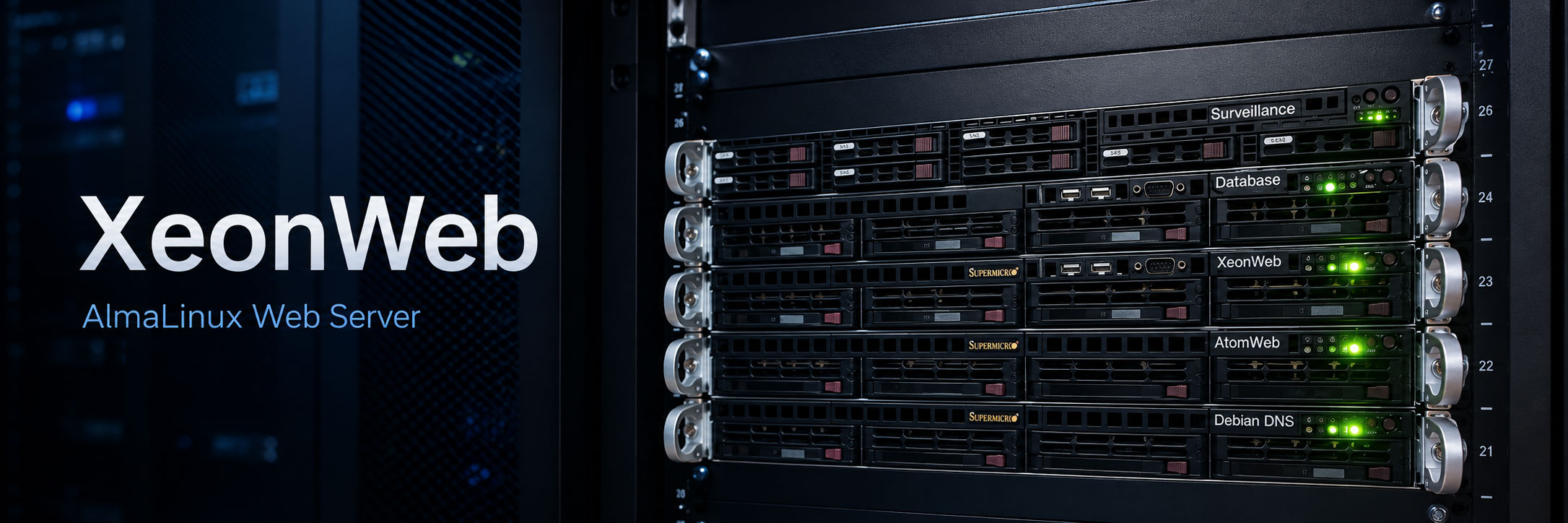

My websites are hosted on a dedicated AlmaLinux server that I configure, secure, maintain, and administer as part of my home network infrastructure. Rather than relying entirely on shared hosting or a preconfigured hosting platform, I operate the underlying Linux server, web stack, hosting environment, and applications myself.
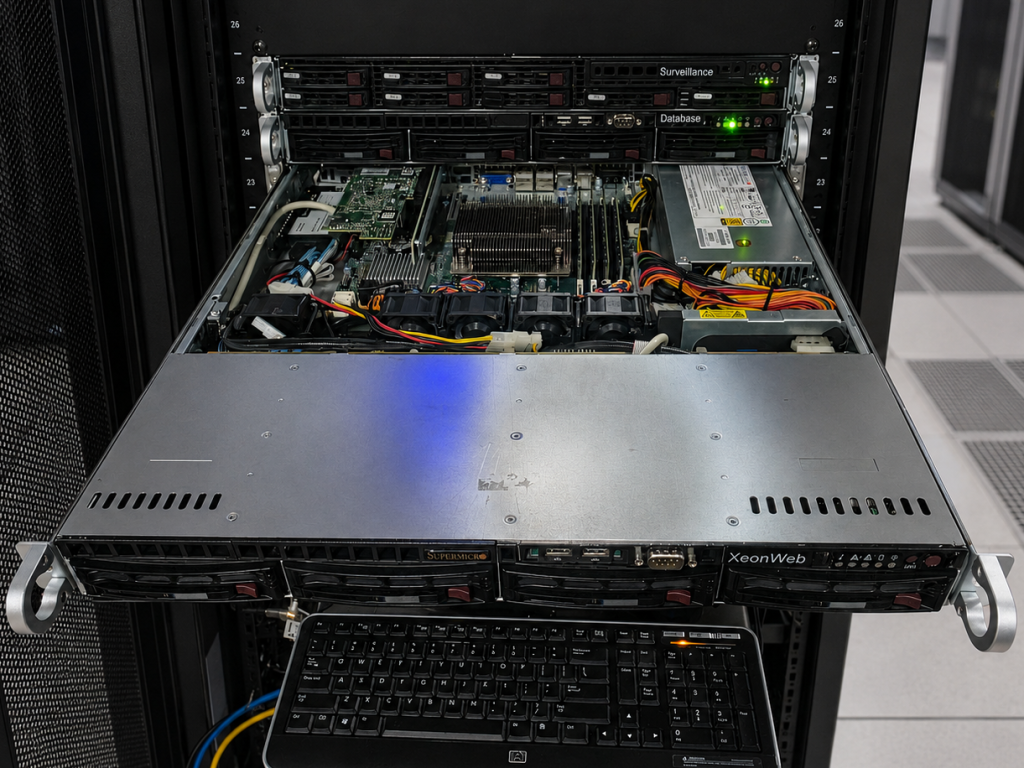
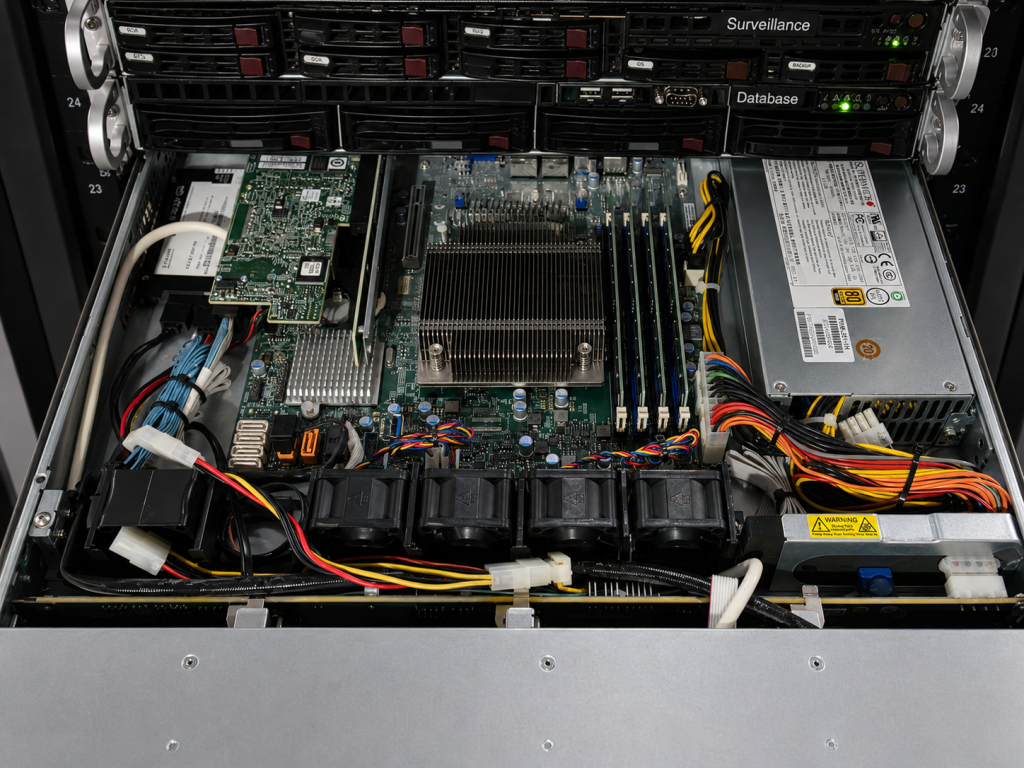
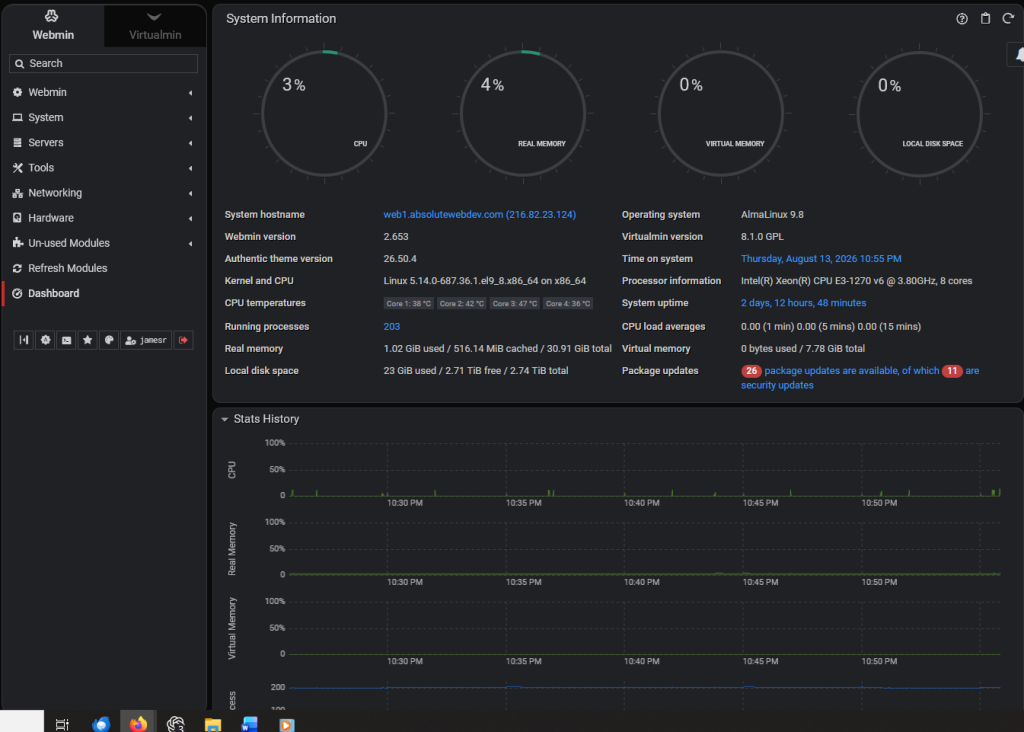
The server, XeonWeb, is a rack-mounted Supermicro system built around an Intel Xeon E3-1270 v6 processor running at 3.80 GHz, with approximately 32 GB of RAM and 2.74 TiB of local storage. It runs AlmaLinux 9.8 and serves as the primary web-hosting platform for several active websites.
Hosted Websites
The server currently hosts and manages:
These sites include a combination of WordPress, MediaWiki, and other web content, all managed within the same self-hosted environment.
Web Hosting Environment
The server uses a traditional LAMP stack consisting of Linux, Apache, MariaDB/MySQL, and PHP. This provides the foundation for hosting dynamic websites and database-driven applications while giving me direct control over the operating system and web services.
I use Virtualmin to manage individual websites, domains, databases, users, virtual hosts, and other hosting services. Webmin provides broader system administration capabilities, allowing me to manage the underlying Linux server from a centralized interface while still retaining direct command-line access when needed.
This setup gives me control over both sides of the hosting environment: the individual websites and the server infrastructure supporting them.
Security
The web server is configured with ModSecurity, providing a web application firewall layer for Apache-hosted applications. Security administration also includes operating-system maintenance, service configuration, permissions, application updates, and management of the individual hosted environments.
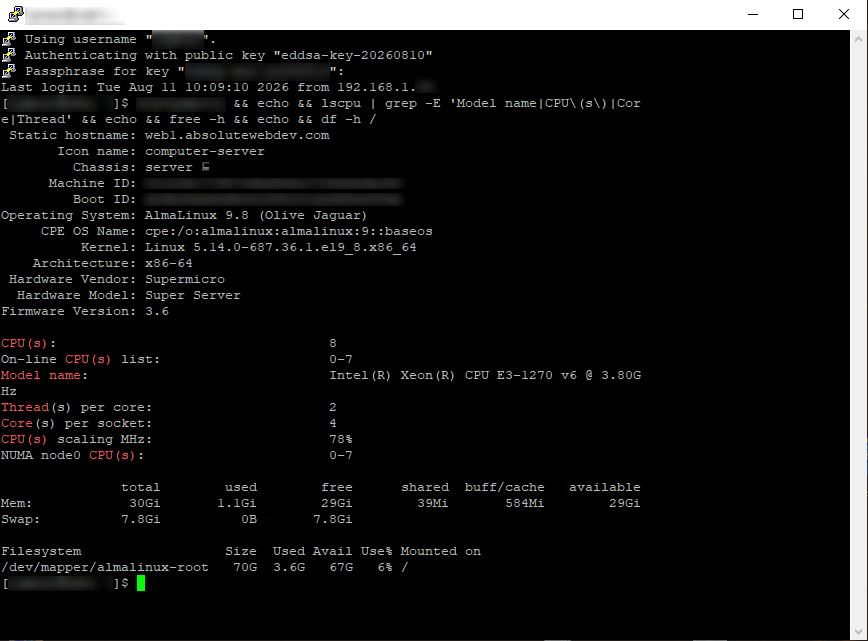
Because I control the complete server rather than only the website application layer, troubleshooting can extend from WordPress or MediaWiki all the way down through PHP, Apache, databases, Linux services, networking, storage, and the operating system itself.
Physical Infrastructure
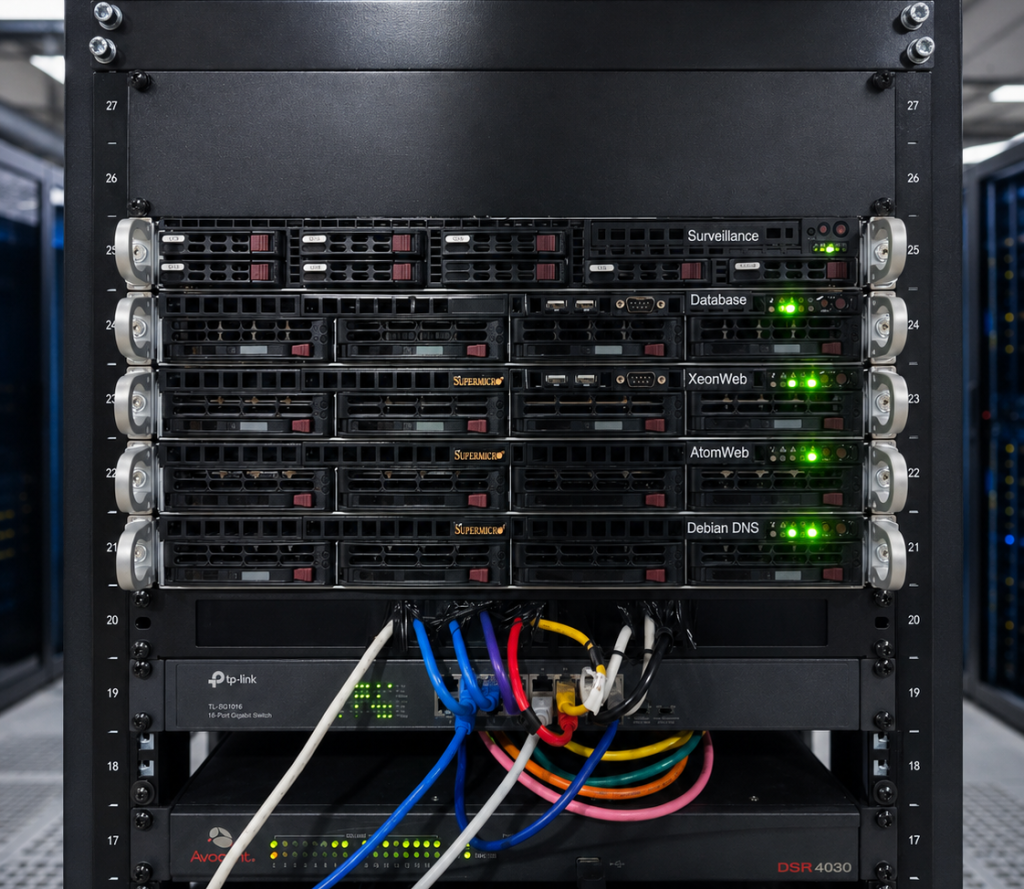
XeonWeb is not a temporary virtual machine or hosted cloud instance. It is a physical rack-mounted server integrated into my own network infrastructure.
The server operates alongside other dedicated systems responsible for services such as DNS, databases, surveillance, storage, and infrastructure monitoring. Separating these functions allows individual systems to be configured around their specific roles while also giving me an environment for working with real networked services and dependencies.
More Than Hosting a Website
Running my own web server means maintaining much more than the content visitors see in a browser. I am responsible for the infrastructure beneath it: installing and configuring the operating system, managing Apache and PHP, administering databases, configuring virtual hosts, managing domains and applications, applying security controls, troubleshooting services, maintaining storage, and keeping the platform operational.
The websites hosted on XeonWeb are therefore not simply examples of web design or development. They are also live workloads running on infrastructure that I built and administer myself.
For me, that is one of the most useful aspects of self-hosting. A website becomes part of a complete system, from the physical server in the rack to Linux, networking, web services, databases, applications, and ultimately the page delivered to the visitor.